
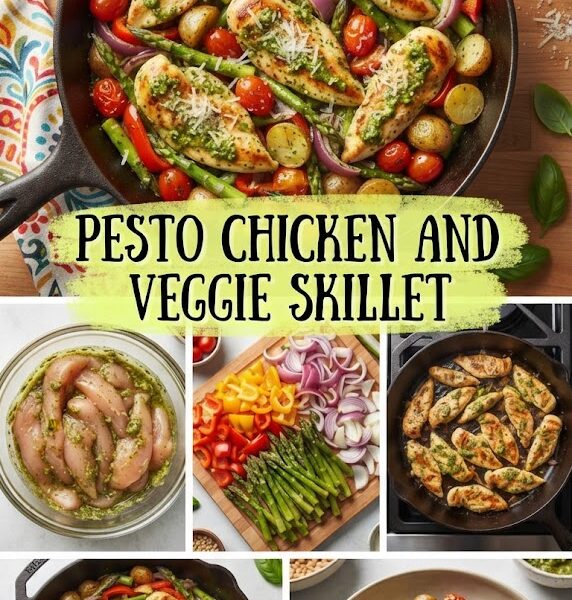
In the modern, fast-paced world, the quest for a dinner that balances nutritional density, gourmet flavor, and minimal cleanup is the “holy grail” of home cooking. Enter the Pesto Chicken and Veggie Skillet. This dish isn’t just a recipe; it’s a strategic approach to weeknight dining that satisfies the palate of a food critic while fitting into the schedule of a busy professional or parent.
The beauty of this dish lies in its simplicity and the vibrant explosion of Mediterranean flavors. By combining lean protein, a rainbow of antioxidant-rich vegetables, and the herbaceous punch of basil pesto, you create a meal that is as visually stunning as it is delicious. Whether you are following a low-carb lifestyle, a ketogenic diet, or simply trying to eat more “real food,” this skillet meal is your new best friend.
Why the One-Pan Skillet Method Wins Every Time
Before we dive into the ingredients, it is essential to understand why the skillet method is superior for this specific flavor profile.
- Flavor Concentration: When you cook everything in one pan, the juices from the chicken mingle with the searing vegetables. This creates a “fond” (the browned bits at the bottom of the pan) that deglazes naturally as the vegetables release their moisture, resulting in a deeper, more complex flavor profile than if the components were cooked separately.
- Texture Control: A high-quality skillet—especially cast iron or heavy-duty stainless steel—allows for superior heat retention. This means you can get a beautiful golden-brown sear on the chicken while keeping the vegetables crisp-tender rather than mushy.
- Efficiency: Cleanup is the enemy of home cooking. By utilizing a single vessel, you reduce your post-dinner chores significantly, making healthy eating a more sustainable habit.
The Anatomy of the Ingredients: Choosing the Best for Your Skillet
To achieve a restaurant-quality Pesto Chicken and Veggie Skillet, you must start with high-quality ingredients. Let’s break down the components.
1. The Protein: Chicken Excellence
While you can use various cuts, boneless, skinless chicken thighs are often preferred for skillet meals. Thighs contain slightly more fat than breasts, which makes them more forgiving; they stay juicy and tender even under high heat. However, if you prefer chicken breasts, the key is to slice them into uniform, bite-sized pieces and avoid overcooking.
- Pro Tip: Look for “air-chilled” chicken. This method prevents the meat from absorbing excess water during processing, ensuring a better sear and more concentrated chicken flavor.
2. The Star of the Show: The Pesto
Pesto is more than just a sauce; it is a concentrated paste of herbs, fats, and umami.
- Homemade Pesto: If time permits, making your own pesto using fresh basil, toasted pine nuts (or walnuts), garlic, high-quality Parmesan cheese, and extra virgin olive oil is transformative.
- Store-Bought Pesto: If buying from the store, look in the refrigerated section rather than the pasta aisle. Refrigerated pesto usually contains fresher oil and fewer preservatives, maintaining that bright green color and punchy basil aroma.
3. The Vegetable Rainbow
To make this a complete meal, we focus on vegetables that cook at similar rates or can be layered.
- Zucchini and Yellow Squash: These provide a soft texture and absorb the pesto beautifully.
- Bell Peppers: Red, yellow, or orange peppers add sweetness and a massive dose of Vitamin C.
- Cherry Tomatoes: When these hit the hot skillet, they eventually burst, creating a natural “sauce” that complements the pesto.
- Red Onion: Provides a sharp, savory contrast to the sweet peppers and herbal basil.
- Asparagus or Green Beans: For a satisfying crunch.
The Science of Searing: Step-by-Step Cooking Process
Phase 1: Preparation and Marination
Begin by cutting your chicken into 1-inch cubes. If you have 15 minutes to spare, toss the chicken in a bowl with a tablespoon of olive oil, a pinch of salt, and a teaspoon of lemon juice. This light acidic marination breaks down the proteins slightly, ensuring tenderness.
Phase 2: The Sear
Heat your skillet over medium-high heat with a tablespoon of high-smoke-point oil (like avocado oil) or extra virgin olive oil. Once the oil shimmers, add the chicken in a single layer.
- Crucial Rule: Do not crowd the pan. If the chicken pieces are touching, they will steam rather than sear. If necessary, cook the chicken in two batches.
- Search for that “GBD” (Golden Brown and Delicious) exterior. Once cooked through (165°F internal temperature), remove the chicken from the pan and set it aside on a plate.
Phase 3: The Vegetable Sauté
In the same pan, add a bit more oil if needed. Toss in the harder vegetables first (onions and peppers). Sauté for 3–4 minutes until they begin to soften. Next, add the zucchini and squash. These cook faster and release more water, so they only need about 3 minutes. Finally, add the cherry tomatoes.
Phase 4: The Integration
Once the vegetables are “al dente,” return the cooked chicken to the skillet. Turn the heat down to low.
Phase 5: The Pesto Finish
This is the most important step: Turn off the heat before adding the pesto. Basil is a delicate herb; if you cook pesto over high heat for too long, the basil will turn brown and lose its vibrant, peppery flavor. Add 3–4 tablespoons of pesto and toss everything together until the chicken and vegetables are evenly coated. The residual heat from the pan is enough to warm the pesto and meld the flavors.
Nutritional Breakdown: Why This Recipe is a Health Powerhouse
The Pesto Chicken and Veggie Skillet is a nutritional “triple threat.” It covers all the bases for a balanced diet.
High-Quality Protein
Chicken is a complete protein, meaning it contains all nine essential amino acids. Protein is vital for muscle repair, immune function, and keeping you feeling full (satiety), which prevents late-night snacking.
Healthy Fats
The olive oil and nuts in the pesto provide monounsaturated fats. These are “heart-healthy” fats that help reduce inflammation and support brain health. The fat also helps your body absorb fat-soluble vitamins (A, D, E, and K) found in the vegetables.
Micronutrients and Antioxidants
- Basil: Contains antioxidants like orientin and viceninare, which help protect cells.
- Garlic: Known for its antimicrobial and heart-health properties.
- Vegetables: This dish is loaded with fiber, which is essential for digestive health. You’re getting a heavy dose of Vitamin A (from peppers), Potassium (from zucchini), and Lycopene (from cooked tomatoes).
Customizing Your Skillet: Diet-Specific Variations
One reason this recipe is so popular in the USA is its adaptability to various dietary trends.
The Keto/Low-Carb Version
This recipe is naturally low-carb. To keep it strictly Keto, ensure your pesto does not have added sugars. You can also add more healthy fats by topping the finished dish with extra Parmesan cheese or a handful of toasted pine nuts. Serve it over “zoodles” (zucchini noodles) or simply eat it as is.
The Paleo/Whole30 Version
For a Paleo or Whole30 compliant meal, you must make your own pesto to avoid dairy and certain oils.
- The Swap: Replace Parmesan cheese in the pesto with nutritional yeast to get that “cheesy” flavor without the dairy. Ensure you use a compliant oil like extra virgin olive oil or avocado oil.
The Vegan/Vegetarian Option
To make this vegetarian, replace the chicken with chickpeas or firm tofu cubes. For a vegan version, use the dairy-free pesto mentioned above. Tofu is excellent in this skillet because it acts like a sponge, soaking up every drop of the pesto sauce.
The Mediterranean Diet Approach
The Mediterranean diet emphasizes plant-based fats and lean proteins. This dish is the poster child for this lifestyle. To enhance the Mediterranean feel, add some Kalamata olives and a sprinkle of feta cheese at the very end.
Expert Tips for the Best Results
- Don’t Overcook the Veggies: There is a fine line between a sautéed vegetable and a mushy one. Aim for “tender-crisp.” The vegetables should still have a slight “snap” when you bite into them.
- Deglaze with Lemon or Wine: If the pan looks a bit dry after browning the chicken, splash in a tablespoon of dry white wine or a squeeze of fresh lemon juice. Use a wooden spoon to scrape up the brown bits—this is where the flavor lives.
- Fresh Herbs: Even though the pesto has basil, garnish the final dish with fresh torn basil leaves or parsley. The hit of raw herb adds a layer of freshness that cooked pesto can’t provide.
- Season in Layers: Season the chicken as it cooks, and season the vegetables as they cook. Don’t wait until the end to add salt, or the flavors will taste “flat.”
Meal Prepping and Storage
This skillet meal is a dream for meal preppers.
Refrigeration
Store leftovers in an airtight container for up to 4 days. Because the ingredients are hearty, they hold up well to reheating.
- Reheating Tip: Use a microwave at 50% power to avoid toughening the chicken. Alternatively, toss it back into a skillet for 2–3 minutes over medium heat.
Freezing
While you can freeze this, keep in mind that zucchini and tomatoes have high water content. When thawed, they may become significantly softer. If you plan to freeze, undercook the vegetables slightly before storing.
What to Serve with Pesto Chicken and Veggie Skillet
While this is a complete “one-pan” meal, sometimes you want a little something extra to round out the plate.
- Grains: Serve over a bed of quinoa, farro, or brown rice. These grains are excellent at soaking up the pesto oils.
- Pasta: Toss the entire skillet with some al dente penne or fusilli for a more filling, carbohydrate-rich meal.
- Crusty Bread: A warm baguette or sourdough slice is perfect for mopping up any leftover sauce on the plate.
- Cauliflower Rice: For those keeping things light, sautéed cauliflower rice provides the texture of grain without the heavy carbs.
Frequently Asked Questions (FAQ)
Can I use frozen vegetables?
Yes, but be careful. Frozen vegetables release more water than fresh ones. If using frozen, sauté them on very high heat to evaporate the moisture quickly, or you may end up with a “soupy” skillet rather than a seared one.
What if my pesto is too thick?
If your pesto is more like a paste, thin it out with a teaspoon of olive oil or a tablespoon of the water you used to boil pasta (if you’re serving it with pasta) before adding it to the skillet.
Can I use other proteins?
Absolutely. This method works beautifully with shrimp, which only take 2–3 minutes to cook, or even sliced Italian sausage. If using shrimp, add them at the very end as they overcook very quickly.
Is this recipe gluten-free?
Naturally, yes! Just ensure your store-bought pesto is certified gluten-free, as some brands use thickeners that may contain gluten.
Troubleshooting Common Issues
- The Chicken is Dry: This usually happens if the chicken is cut too small or cooked too long. Aim for 1-inch chunks and remove them as soon as they reach 165°F.
- The Dish is Too Oily: Pesto is naturally high in fat. If you find the dish too greasy, add a splash of lemon juice or balsamic vinegar. The acid will “cut” through the fat and balance the palate.
- The Basil Turned Grey: This is oxidation. It happens when basil is exposed to high heat or air for too long. Ensure you add the pesto at the very end with the heat off to maintain that emerald green hue.
The Cultural Significance of Pesto
To truly appreciate this dish, it’s worth noting that pesto (Pesto alla Genovese) originates from Genoa, Italy. Traditionally made in a marble mortar with a wooden pestle (hence the name pestâ, meaning “to pound”), it was a way to preserve the summer’s bounty of basil. By bringing this traditional Italian sauce into a modern American skillet meal, we are blending old-world flavor with new-world efficiency.
In the United States, the “Skillet Meal” has become a staple of the healthy home cooking movement. It represents a shift away from processed “TV dinners” toward fresh, whole ingredients that can be prepared in under 30 minutes.
Essential Kitchen Tools for This Recipe
To make your cooking experience seamless, ensure you have the following:
- A 12-inch Skillet: Cast iron, stainless steel, or a high-quality non-stick pan.
- A Sharp Chef’s Knife: For uniform vegetable and chicken pieces.
- A Meat Thermometer: The only way to guarantee perfectly juicy chicken every time.
- Silicone Tongs: Great for flipping chicken and tossing vegetables without scratching your pan.
Final Thoughts: The Joy of Simple Cooking
The Pesto Chicken and Veggie Skillet is more than just a combination of ingredients. It is a testament to the fact that you don’t need a culinary degree or hours of free time to produce a meal that is healthy, flavorful, and beautiful. It encourages us to eat the colors of the rainbow, to prioritize high-quality proteins, and to enjoy the process of cooking.
As you stand over your skillet, watching the tomatoes burst and smelling the aromatic garlic and basil, you aren’t just making dinner—you’re creating a moment of wellness for yourself and whoever is lucky enough to share your table.
Summary Recipe Card
- Prep Time: 15 minutes
- Cook Time: 15 minutes
- Total Time: 30 minutes
- Servings: 4
- Calories: Approximately 350-400 per serving (depending on pesto and chicken cut)
Ingredients:
- 1.5 lbs Chicken Thighs or Breasts, cubed
- 2 tbsp Extra Virgin Olive Oil
- 1 large Zucchini, sliced into half-moons
- 1 Red Bell Pepper, chopped
- 1 cup Cherry Tomatoes, halved
- 1/2 Red Onion, sliced
- 1/2 cup Basil Pesto (homemade or high-quality store-bought)
- Salt and Pepper to taste
- Optional: Red pepper flakes, Parmesan cheese, fresh basil for garnish.
Instructions:
- Season chicken with salt and pepper.
- Heat 1 tbsp oil in a large skillet over medium-high heat.
- Brown chicken until cooked through (6–8 minutes). Remove and set aside.
- Add remaining oil and sauté onions and peppers for 3 minutes.
- Add zucchini and tomatoes; sauté for another 3–5 minutes until tender.
- Return chicken to the pan. Turn off heat.
- Stir in pesto until well combined.
- Garnish and serve immediately.
SEO Metadata & Tags
- Primary Keyword: Pesto Chicken and Veggie Skillet
- Secondary Keywords: One-pan chicken dinner, healthy 30-minute meals, keto chicken recipe, Mediterranean skillet, easy weeknight dinner, low carb pesto chicken, gluten-free skillet recipe, fresh basil pesto chicken, chicken and zucchini skillet.
- Search Intent: Informational/Transactional (User is looking for a healthy, fast recipe and instructions).
- Meta Description: Discover the ultimate Pesto Chicken and Veggie Skillet recipe. A healthy, one-pan, 30-minute meal perfect for busy weeknights. Keto-friendly and packed with Mediterranean flavor.