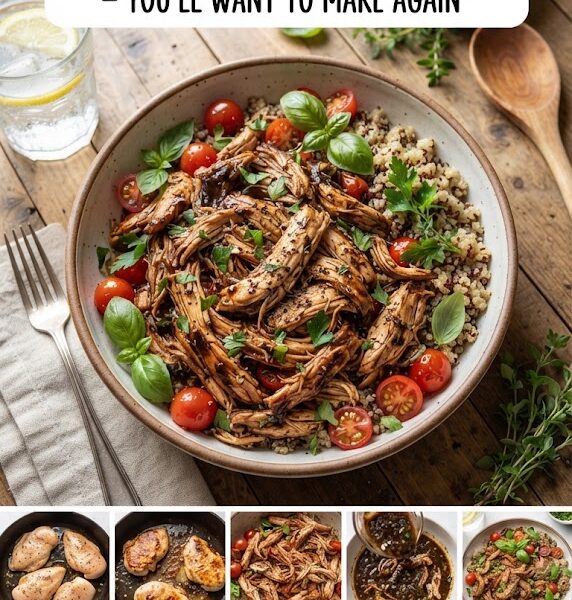
In the fast-paced world of modern living, the dinner table often becomes a battleground between the desire for a gourmet meal and the exhaustion of a long workday. We have all been there: staring into the refrigerator at 6:00 PM, wondering how to transform a package of chicken into something that doesn’t taste like cardboard. Enter the 30-Minute Shredded Chicken Balsamic Herb Style. This isn’t just a recipe; it is a lifestyle solution. It is the perfect marriage of Mediterranean elegance and weeknight efficiency.
By the end of this guide, you won’t just have a recipe; you will have mastered a technique that yields succulent, flavor-packed chicken that works for salads, sandwiches, pastas, or as a standalone star.
Why Balsamic and Herbs? The Science of Flavor
Before we dive into the “how,” let’s talk about the “why.” Why does this specific combination work so effectively?
The Magic of Balsamic Vinegar
Balsamic vinegar is more than just a salad dressing component. Originating from Italy (specifically Modena and Reggio Emilia), true balsamic is made from grape must. In this recipe, the balsamic serves three critical roles:
- Tenderization: The acetic acid in the vinegar helps break down the protein fibers in the chicken, ensuring every bite is tender.
- Caramelization: Because of its natural sugar content, balsamic reduces into a thick, syrupy glaze that clings to the shredded chicken.
- Umami Depth: It provides a rich, dark flavor profile that mimics hours of slow-cooking in just a few minutes.
The Aromatic Trio: Rosemary, Thyme, and Oregano
Herbs are the soul of this dish. While dried herbs are convenient, fresh herbs elevate this to restaurant quality.
- Rosemary: Adds a woody, pine-like aroma.
- Thyme: Provides a subtle earthy note.
- Oregano: Offers a hint of bitterness and spice that cuts through the sweetness of the balsamic.
The Essential Ingredients List
To achieve the best results, quality matters. Here is what you will need for the ultimate Shredded Chicken Balsamic Herb Style.
For the Chicken
- 2 lbs Chicken Breast or Thighs: Use boneless and skinless for the 30-minute timeline. Thighs are more forgiving and juicy, while breasts are leaner.
- Kosher Salt and Coarse Black Pepper: Essential for the initial sear.
- 2 Tablespoons Extra Virgin Olive Oil: Choose a high-quality oil with a high smoke point.
For the Balsamic Herb Glaze
- 1/2 Cup Balsamic Vinegar: Look for “Aceto Balsamico di Modena” for authentic flavor.
- 1/4 Cup Low-Sodium Chicken Broth: This helps deglaze the pan and prevents the vinegar from becoming too harsh.
- 3 Cloves Garlic: Minced finely.
- 1 Tablespoon Honey or Maple Syrup: To balance the acidity.
- 1 Tablespoon Fresh Rosemary: Finely chopped.
- 1 Tablespoon Fresh Thyme: Leaves stripped from the stem.
- 1 Teaspoon Dried Oregano: To provide a foundational base.
For Finishing
- Red Pepper Flakes: For a subtle kick.
- Fresh Parsley: For a pop of color and freshness.
- Zest of half a Lemon: This is the “secret ingredient” that brightens the entire dish.
Step-by-Step Instructions: Mastering the 30-Minute Window
Follow these steps meticulously to ensure your chicken remains juicy while absorbing every ounce of flavor.
Step 1: Preparation and Pounding
Speed is the name of the game. If you are using chicken breasts, they are often uneven in thickness. Place them between two sheets of plastic wrap and use a meat mallet or a heavy skillet to pound them to a uniform thickness (about 3/4 inch). This ensures they cook evenly and quickly.
Step 2: The Perfect Sear
Heat your olive oil in a large skillet over medium-high heat. Season your chicken generously with salt and pepper. Once the oil is shimmering (but not smoking), add the chicken.
- The Goal: You aren’t trying to cook it through yet. You want a golden-brown crust. This is the Maillard reaction—the chemical reaction between amino acids and reducing sugars that gives browned food its distinctive flavor.
- Time: 3-4 minutes per side. Remove the chicken and set it aside on a plate.
Step 3: Building the Sauce
Lower the heat to medium. In the same pan, add the minced garlic. Sauté for 30 seconds until fragrant—do not let it burn! Pour in the balsamic vinegar and chicken broth. Use a wooden spoon to scrape the bottom of the pan; these browned bits (the fond) are flavor gold.
Step 4: Infusion
Add the honey, rosemary, thyme, and oregano to the liquid. Stir well and let it simmer for 2 minutes. The sauce will begin to reduce slightly and thicken.
Step 5: The Braise
Return the chicken (and any juices from the plate) to the skillet. Cover the pan with a lid and reduce the heat to medium-low. Let it simmer for about 8-10 minutes. This “mini-braise” finishes the cooking process while infusing the meat with the balsamic-herb essence.
Step 6: The Shred
Once the internal temperature reaches 165°F, remove the chicken to a clean cutting board. Using two forks, shred the meat into bite-sized pieces.
Step 7: The Final Glaze
Return the shredded chicken to the skillet. Turn the heat back up to medium and toss the chicken in the remaining sauce for 2 minutes. The meat will act like a sponge, soaking up the dark, aromatic glaze. Finish with lemon zest and fresh parsley.
Advanced Techniques for the Perfect Shred
While forks are the traditional method, there are faster ways to handle the shredding process:
- The Stand Mixer Method: If you are making a large batch, put the warm cooked chicken into the bowl of a stand mixer with the paddle attachment. Turn it on low for 30-45 seconds. Perfectly shredded chicken in a fraction of the time.
- The Hand Mixer Trick: Use a handheld electric mixer directly in the pot (if it’s not non-stick) to break the meat apart quickly.
- The Pulse Method: A few quick pulses in a food processor will give you a finer shred, ideal for chicken salad textures.
Nutrition and Dietary Benefits
In an era of health-conscious eating, the 30-Minute Shredded Chicken Balsamic Herb Style stands out as a nutritional powerhouse.
- High Protein: Essential for muscle repair and satiety.
- Low Carb/Keto Friendly: By substituting the honey for a keto-friendly sweetener (like monk fruit) or omitting it entirely, this dish fits perfectly into a ketogenic lifestyle.
- Paleo and Whole30: Simply ensure your balsamic vinegar has no added sulfites or sugars, and swap the honey for a splash of apple juice or date paste.
- Anti-Inflammatory Properties: Garlic and fresh herbs like rosemary are packed with antioxidants that help fight inflammation in the body.
Meal Prep Mastery: How to Use Your Shredded Chicken
One of the greatest strengths of this recipe is its versatility. If you make a double batch on Sunday, you have the base for four different meals throughout the week.
1. The Balsamic Chicken Power Bowl
Layer the shredded chicken over a bed of quinoa or farro. Add roasted sweet potatoes, steamed broccoli, and a dollop of hummus. The balsamic glaze acts as a built-in dressing for the grains.
2. Mediterranean Style Tacos
Forget the cumin and lime. Use corn tortillas, top with the balsamic chicken, add some crumbled feta cheese, pickled red onions, and a drizzle of Greek yogurt mixed with dill.
3. The Ultimate Gourmet Salad
Toss mixed greens with strawberries, toasted walnuts, and goat cheese. Top with the warm shredded chicken. The sweetness of the strawberries complements the balsamic perfectly.
4. Balsamic Chicken Pasta
Toss the shredded chicken with al dente penne or linguine. Add a splash of heavy cream or a scoop of ricotta to the leftover pan sauce to create a creamy balsamic herb pasta.
Troubleshooting Common Issues
Even the best cooks run into hiccups. Here is how to fix common problems with this dish:
- Dry Chicken: This usually happens if the heat was too high during the braising phase. If your chicken is dry, toss it with an extra tablespoon of olive oil or a little more chicken broth to rehydrate the fibers.
- Sauce Too Thin: If the glaze isn’t clinging to the chicken, remove the meat and let the liquid boil uncovered for another 3-4 minutes. The reduction will thicken as the water evaporates.
- Too Acidic: If the balsamic flavor is too sharp, add a small knob of butter at the very end. The fat will mellow out the acidity and give the sauce a silky finish.
The Role of Equipment in Your Success
While you can make this in any pan, certain tools will make the process easier and the results better.
1. Cast Iron Skillet
A cast iron skillet provides superior heat retention. This is vital for getting that deep, dark sear on the chicken in the first few minutes.
2. Instant-Read Thermometer
Stop guessing if your chicken is done. An instant-read thermometer ensures you pull the chicken at exactly 165°F, preventing it from becoming rubbery.
3. Microplane
A microplane is essential for the garlic and the lemon zest. The finer the garlic, the more its flavor permeates the oil; the finer the zest, the more essential oils are released into the dish.
Seasonal Variations of Balsamic Herb Chicken
While the base recipe is a classic, you can adapt it to the changing seasons to keep your palate excited.
Spring: The Asparagus & Pea Twist
Add fresh asparagus spears and frozen peas to the pan during the last 5 minutes of simmering. The green, snappy vegetables contrast beautifully with the dark balsamic.
Summer: The Peach & Basil Infusion
Swap the rosemary for fresh basil. During the final toss, add sliced fresh peaches. The balsamic-peach combination is a hallmark of summer gourmet cooking.
Autumn: The Apple & Sage Version
Replace the thyme with fresh sage and add diced Granny Smith apples to the pan. The tartness of the apples pairs exceptionally well with the vinegar.
Winter: The Cranberry & Walnut Crunch
Stir in dried cranberries and toasted walnuts during the final 2 minutes. This adds a festive, hearty texture that is perfect for cold nights.
The History and Evolution of Shredded Chicken Dishes
Shredded chicken, often referred to as “pulled” chicken in Southern BBQ traditions, has roots in various cultures. From the Tinga de Pollo of Mexico to the Congee toppings of Asia, shredding meat is a technique used to stretch expensive protein and ensure every strand is seasoned.
The integration of balsamic vinegar into this technique is a relatively modern “fusion” development. It takes the rustic, comfort-food feel of shredded meat and elevates it with the sophisticated, acidic profile of Italian cuisine. This recipe represents the “New American” style of cooking: fast, healthy, and globally inspired.
Pairing Recommendations
To truly turn this 30-minute meal into an experience, consider these pairings.
Wine Pairings
- Red: A light-bodied Pinot Noir or a Chianti. The acidity in the wine matches the acidity in the balsamic.
- White: A crisp Sauvignon Blanc or an un-oaked Chardonnay. The citrus notes in these wines complement the lemon zest and herbs.
Side Dishes
- Garlic Mashed Cauliflower: For a low-carb, creamy base.
- Honey Glazed Carrots: To lean into the sweetness of the balsamic.
- Crispy Polenta Wedges: The texture contrast between the soft chicken and crunchy polenta is divine.
Storage and Reheating Tips
If you’re lucky enough to have leftovers, you need to store them correctly to maintain the texture.
- Storage: Store in an airtight glass container for up to 4 days in the refrigerator.
- Freezing: This dish freezes remarkably well. Place the shredded chicken and sauce in a freezer bag, remove as much air as possible, and freeze for up to 3 months.
- Reheating: Avoid the microwave if possible, as it can make chicken rubbery. Instead, reheat in a small skillet over low heat with a tablespoon of water or broth to loosen the sauce.
Why This Recipe Will Become a Weekly Staple
Consistency is the key to a successful home kitchen. The 30-Minute Shredded Chicken Balsamic Herb Style is a “high-yield” recipe—not just in terms of quantity, but in terms of satisfaction versus effort.
It hits every flavor note:
- Sweet: From the honey and balsamic reduction.
- Sour: From the vinegar and lemon zest.
- Salty: From the seasoned sear.
- Bitter: From the fresh herbs.
- Umami: From the garlic and the concentrated chicken juices.
When you can check all those boxes in half an hour, you have found a recipe worth keeping forever.
Conclusion: Elevating Your Culinary Game
Cooking doesn’t have to be a chore, and healthy food doesn’t have to be boring. By understanding the principles of searing, deglazing, and reducing, you can turn humble chicken into a gourmet delight. The Shredded Chicken Balsamic Herb Style is a testament to the power of simple, high-quality ingredients used with intention.
Whether you are cooking for a family of four, prepping for a fitness goal, or hosting a last-minute dinner party, this dish delivers every single time. So, grab your skillet, sharpen your knife, and get ready to enjoy a meal that you will truly want to make again and again.
Quick Reference Summary Table
| Feature | Details |
|---|---|
| Prep Time | 10 Minutes |
| Cook Time | 20 Minutes |
| Total Time | 30 Minutes |
| Main Flavor | Tangy, Herby, Savory |
| Best Protein | Chicken Thighs (for moisture) or Breasts (for lean protein) |
| Dietary | Keto-friendly, Gluten-free, High-Protein |
| Storage | 4 Days in Fridge / 3 Months in Freezer |
Frequently Asked Questions (FAQ)
Can I use bone-in chicken?
While you can, it will significantly increase the cooking time beyond 30 minutes. If using bone-in, expect a cook time of about 25-30 minutes for the braising step.
What if I don’t have fresh herbs?
You can use dried herbs, but remember the “Rule of Three.” Dried herbs are more concentrated, so use 1 teaspoon of dried herbs for every 1 tablespoon of fresh.
Is balsamic vinegar gluten-free?
Generally, yes. Most balsamic vinegars are made purely from grapes. However, always check the label for “caramel color” or thickeners if you have a severe gluten allergy.
My sauce is too dark, is that normal?
Yes! Balsamic vinegar reduces into a very dark, almost black glaze. This provides a beautiful contrast against white plates and green garnishes.
Can I make this in a Slow Cooker or Instant Pot?
Absolutely.
- Slow Cooker: Low for 6-8 hours or High for 3-4 hours.
- Instant Pot: High pressure for 12 minutes with a quick release.
- Note: You will still want to reduce the sauce on the “Sauté” setting afterward to get that thick glaze.
How do I make this spicy?
Increase the red pepper flakes to 1 teaspoon, or add a tablespoon of Sriracha or Calabrian chili paste to the balsamic mixture. The heat pairs beautifully with the sweet vinegar.
Can I use other vinegars?
Apple cider vinegar can work in a pinch, but the flavor will be much sharper and less complex. Red wine vinegar is another alternative, but you may need to add an extra tablespoon of honey to mimic the sweetness of balsamic.
Is this dish kid-friendly?
Most kids love the sweetness of the balsamic glaze. If your children are sensitive to “green things,” finely chop the herbs or use a little less rosemary, which can be quite strong.
What’s the best way to clean a balsamic-stained pan?
Don’t let the pan sit! While the pan is still warm, add some water and bring it to a boil. The heat will loosen the sugars, making it easy to wipe clean.
Can I use turkey instead of chicken?
Yes, turkey breast tenderloins are an excellent substitute and follow the same cooking timeline.
Final Thoughts on the 30-Minute Shredded Chicken
In the journey of home cooking, we often look for “magic” recipes—those rare gems that require little effort but yield extraordinary results. The 30-Minute Shredded Chicken Balsamic Herb Style is exactly that. It is a masterclass in flavor layering. It teaches the importance of the sear, the utility of the deglaze, and the beauty of fresh aromatics.
Once you make this, it won’t just be a line on your meal plan; it will be a tool in your culinary arsenal. You’ll find yourself craving that tangy, herb-infused aroma every Tuesday night. It is proof that you don’t need hours to create something memorable. You just need 30 minutes and the right ingredients. Happy cooking!