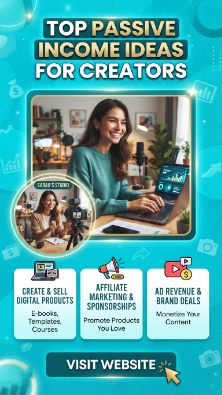
with Pinterest
Imagine waking up to a series of notifications on your phone: sales from your digital storefront, commissions from affiliate links, and a steady stream of ad revenue from your blog. The best part? You didn’t trade your morning hours for this money. You built a system that works while you sleep. This is the promise of Pinterest—a platform often misunderstood as a simple social media site, but in reality, one of the most powerful visual search engines in existence.
While Instagram is about “the now” and TikTok is about “the trend,” Pinterest is about “the future.” People go to Pinterest to plan their lives, their homes, and their purchases. This planning mindset makes it the ultimate goldmine for generating passive income. In this comprehensive guide, we will dive deep into the mechanics of Pinterest, exploring how to turn pins into a recurring revenue stream.
1. Understanding the Pinterest Ecosystem: It’s Not Social Media
To succeed on Pinterest, you must first unlearn everything you know about social media. On Facebook or X (formerly Twitter), your content has a lifespan of minutes or hours. On Pinterest, a single “Pin” can drive traffic and sales for years.
The Search Engine Mindset
Pinterest functions more like Google than it does like Instagram. It uses an algorithm based on keywords, visual recognition, and user intent. When a user types “minimalist living room ideas” into the search bar, Pinterest acts as a curator, showing them the most relevant, high-quality images.
The Longevity of Content
Because Pinterest is a search engine, your content is “evergreen.” A pin you created in 2021 can suddenly go viral in 2024 because it matches a current search trend. This longevity is the fundamental pillar of passive income. You do the work once, and the platform continues to distribute that work indefinitely.
2. Setting the Foundation: The Pinterest Business Account
You cannot build a professional passive income stream on a personal account. You need the tools, analytics, and features provided by a Pinterest Business Account.
Steps to Professional Setup:
- Switch to Business: It’s free. This gives you access to Pinterest Analytics and the Ads Manager.
- Claim Your Domain: This is critical. By claiming your website (or Etsy shop, YouTube channel, etc.), Pinterest verifies you as a trusted creator. It also enables “Rich Pins,” which pull extra metadata from your site onto the pin itself.
- Optimize Your Profile: Your profile name and bio should be keyword-rich. Instead of “Sarah’s Creative Corner,” use “Sarah | DIY Home Decor & Budget Wedding Planning.”
- The Pinterest Tag: If you have a website, install the Pinterest Tag (similar to a Facebook Pixel). This tracks what users do after they click your pin, allowing you to refine your strategy based on actual conversions.
3. Mastering Pinterest SEO: The Key to Being Found
SEO (Search Engine Optimization) is the engine that drives your passive income. Without it, your beautiful pins are invisible.
Keyword Research
Don’t guess what people are looking for. Use the Pinterest search bar to see what auto-completes. If you type “Passive Income,” Pinterest might suggest “Passive Income for Beginners,” “Passive Income Ideas,” or “Passive Income Digital Products.” These are your target keywords.
Where to Place Keywords:
- Pin Titles: Make them catchy but keyword-heavy.
- Pin Descriptions: Write naturally, but weave in 3-5 relevant keywords. Avoid “keyword stuffing” (just listing words); instead, write a helpful description.
- Board Titles and Descriptions: Organize your pins into specific boards (e.g., “Passive Income Strategies” rather than just “Money”).
- Alt Text: Use the alt text field to describe the image for visually impaired users, including your primary keyword.
4. Method 1: Affiliate Marketing – The Lowest Barrier to Entry
Affiliate marketing is the process of earning a commission by promoting other people’s products. Pinterest is an affiliate marketer’s dream because it allows for direct linking (in most cases) and visual discovery.
How It Works
You find a product you love on a platform like Amazon Associates, ShareASale, or Impact. You create a stunning pin featuring that product and include your unique affiliate link as the destination URL. When someone clicks and buys, you get paid.
Strategies for Success:
- Bridge Pages vs. Direct Linking: While Pinterest allows direct affiliate links, creating a “bridge page” (a blog post or a simple landing page) often converts better. For example, a pin titled “5 Tools I Use for My 6-Digit Business” leading to a blog post with five affiliate links is more valuable than a pin for just one tool.
- High-Ticket vs. Low-Ticket: Balance your strategy. Promoting a $500 course might yield a $200 commission, but it requires more trust. Promoting a $20 kitchen gadget might only yield $1, but the volume of sales will be higher.
- Disclosure is Mandatory: Always use
#ador#affiliatein your pin descriptions to stay compliant with FTC guidelines and Pinterest’s terms of service.
5. Method 2: Selling Digital Products – The Ultimate Passive Income
If you want 100% of the profits, digital products are the way to go. Once created, a digital product can be sold an infinite number of times with zero inventory or shipping costs.
Popular Digital Products for Pinterest:
- Printables: Budget planners, meal planners, coloring pages, or checklists.
- Templates: Canva templates for social media, resume templates, or website themes.
- E-books and Guides: “How-to” guides on specific niches like gardening, keto dieting, or coding.
- Stock Photography or Presets: If you are a photographer, selling Lightroom presets is a massive niche on Pinterest.
The Funnel Strategy:
- The Hook: Create a pin that solves a specific problem (e.g., “How to Organize Your Finances in 10 Minutes”).
- The Lead Magnet: Link the pin to a freebie (a “lead magnet”) in exchange for an email address.
- The Upsell: Once they are on your email list, use automated email sequences to sell your premium digital products.
6. Method 3: Blogging and Ad Revenue
This is the “old school” but incredibly effective way to generate passive income. By driving massive amounts of traffic from Pinterest to a blog, you can earn money through display ads (like Mediavine, Raptive, or Google AdSense).
Why Pinterest + Blogging?
Google SEO takes months or years to kick in. Pinterest can send thousands of visitors to a new blog post within days.
The Workflow:
- Write a high-quality, long-form blog post (e.g., “20 Best Places to Visit in Italy”).
- Create 5-10 different pin designs for that single post.
- Distribute those pins over several weeks.
- As traffic grows, apply for high-paying ad networks. Many bloggers earn between $1,000 and $10,000+ per month purely from ad revenue fueled by Pinterest traffic.
7. Visual Content Creation: Designing Pins That Click
Pinterest is a visual medium. If your pin is ugly or unreadable, no one will click, regardless of how good your SEO is.
Anatomy of a High-Converting Pin:
- Vertical Aspect Ratio: Use 2:3 (1000 x 1500 pixels). Square or horizontal pins get buried.
- Bold Text Overlays: Use clear, easy-to-read fonts. Tell the user exactly what they get when they click.
- High-Quality Imagery: Use bright, airy, and professional photos. Avoid generic stock photos that look like “ads.”
- Branding: Include your logo or website URL at the bottom of every pin to build brand recognition.
- The “Call to Action” (CTA): Sometimes, people need to be told what to do. Adding a small button image that says “Download Now” or “Read More” can increase click-through rates by 40%.
8. Automation: Putting Your Income on Autopilot
Passive income isn’t truly passive if you’re pinning manually all day. You need tools to handle the heavy lifting.
Using Tailwind
Tailwind is the gold standard for Pinterest automation. It allows you to:
- Schedule Pins: Batch your work. Spend 2 hours on a Sunday scheduling pins for the entire month.
- Tailwind Communities: Join groups of creators in your niche who share each other’s content, magnifying your reach.
- SmartLoop: Automatically re-share your best-performing evergreen content at optimal times.
Pinterest’s Native Scheduler
If you’re on a budget, Pinterest has a built-in scheduler that allows you to plan pins up to two weeks in advance. While less powerful than Tailwind, it’s a great starting point for beginners.
9. Analyzing Your Results: Turning Data into Dollars
You cannot improve what you do not measure. Pinterest Analytics provides a wealth of information.
Metrics That Matter:
- Impressions: How many times your pins were seen. This tells you if your SEO is working.
- Outbound Clicks: This is the most important metric. It tells you how many people actually left Pinterest to visit your site or affiliate link.
- Saves (Repins): This indicates that your content is valuable enough for people to want to look at it later. High saves signal the algorithm to show your pin to more people.
The Pivot
If you notice that “Minimalist Decor” pins are getting 10x the clicks of “Industrial Decor” pins, stop making Industrial pins. Double down on what the data tells you the audience wants.
10. The Power of Seasonal Content
Pinterest users are planners. They start looking for Christmas ideas in September and summer vacation ideas in February. To maximize passive income, you must stay ahead of the curve.
The 3-Month Rule
Create and pin your content about 45 to 90 days before the holiday or season begins. By the time the peak search volume hits, your pins will have already gained traction and authority in the algorithm, placing you at the top of the search results.
11. Avoiding the “Spam” Trap
Pinterest is very protective of its user experience. If you look like a spammer, your account will be shadowbanned or suspended.
How to Stay Safe:
- Don’t Pin the Same Link Repeatedly: Vary your destination URLs. If you’re promoting one product, link to different blog posts or landing pages.
- Fresh Content is King: Pinterest prioritizes “Fresh Pins” (new images). Instead of pinning the same image over and over, create 5 different designs for the same link.
- Quality Over Quantity: It is better to pin 5 high-quality, relevant pins a day than 50 low-quality, random pins.
12. Advanced Strategy: Pinterest to Email List
If you want to build a long-term business, your email list is your most valuable asset. Pinterest is the best “top of funnel” tool to get people into your ecosystem.
- The Freebie: Offer a “Printable Habit Tracker.”
- The Pin: A beautiful image of the tracker in use.
- The Opt-In: The pin leads to a landing page where they enter their email to get the tracker.
- The Automation: An automated email sequence sends them the tracker, introduces your brand, and eventually offers a paid product.
Once this system is set up, it runs entirely on its own. You are simply feeding the top of the funnel with Pinterest traffic.
13. Diversifying Your Income Streams
Don’t put all your eggs in one basket. Use Pinterest to fuel multiple streams of income simultaneously:
- Ads on your blog for steady pennies.
- Affiliate Links for mid-range commissions.
- Digital Products for high-profit margins.
- Brand Sponsorships: As your Pinterest reach grows, brands will pay you to create “Idea Pins” featuring their products.
14. Niche Selection: Where the Money Is
While you can find success in almost any niche, some perform significantly better on Pinterest due to the platform’s demographic (primarily women, planners, and hobbyists).
Top Performing Niches:
- Home Decor & DIY: Interior design, organization, renovations.
- Health & Wellness: Keto recipes, yoga routines, mental health tips.
- Finance: Budgeting, side hustles, investing for beginners.
- Fashion: Seasonal outfits, capsule wardrobes, beauty tutorials.
- Parenting: Education, kids’ crafts, pregnancy tips.
- Technology: AI tools, software reviews, gaming setups.
15. Common Mistakes to Avoid
- Giving Up Too Soon: Pinterest is a slow burn. It takes about 3-6 months of consistent pinning to see significant results.
- Ignoring Mobile Users: 80% of Pinterest users are on mobile. Ensure your text overlays are large enough to read on a small screen and your website is mobile-friendly.
- Not Using Video Pins: Video pins and “Idea Pins” currently get massive reach. Incorporate short, 15-second clips to boost your visibility.
- Broken Links: Regularly check that your pins aren’t leading to 404 pages. A broken link is a lost sale and a strike against your account’s health.
16. Scaling Your Pinterest Empire
Once you have one niche working, repeat the process.
- Multiple Accounts: Some creators manage 5-10 different Pinterest accounts across various niches, using a Pinterest Virtual Assistant (VA) to handle the daily pinning.
- Promoted Pins: Once you know a pin is converting well, put some “ad spend” behind it. If you spend $1 on an ad and it generates $2 in sales, you have an infinite money machine.
17. Conclusion: Your Journey to Passive Income Starts with One Pin
Pinterest is not a magic “get rich quick” button. It requires a strategic setup, an understanding of SEO, and a commitment to creating high-quality visual content. However, unlike almost any other platform, the work you do today will continue to pay you dividends for years to come.
The beauty of Pinterest lies in its ability to connect your solutions with people who are actively searching for them. Whether you are selling your own digital products, recommending your favorite tools through affiliate links, or driving traffic to an ad-supported blog, the potential for passive income is limitless.
Stop scrolling and start pinning. Your future self—the one waking up to those sales notifications—will thank you.
Summary Checklist for Beginners:
- Create a Pinterest Business Account.
- Claim your website and set up Rich Pins.
- Perform keyword research using the Pinterest search bar.
- Create 10-15 Boards with keyword-rich titles and descriptions.
- Design your first 10 pins using Canva (2:3 ratio).
- Sign up for an affiliate network or create a simple digital product.
- Schedule your pins using Tailwind or the native Pinterest scheduler.
- Monitor your analytics weekly and adjust your strategy based on what works.