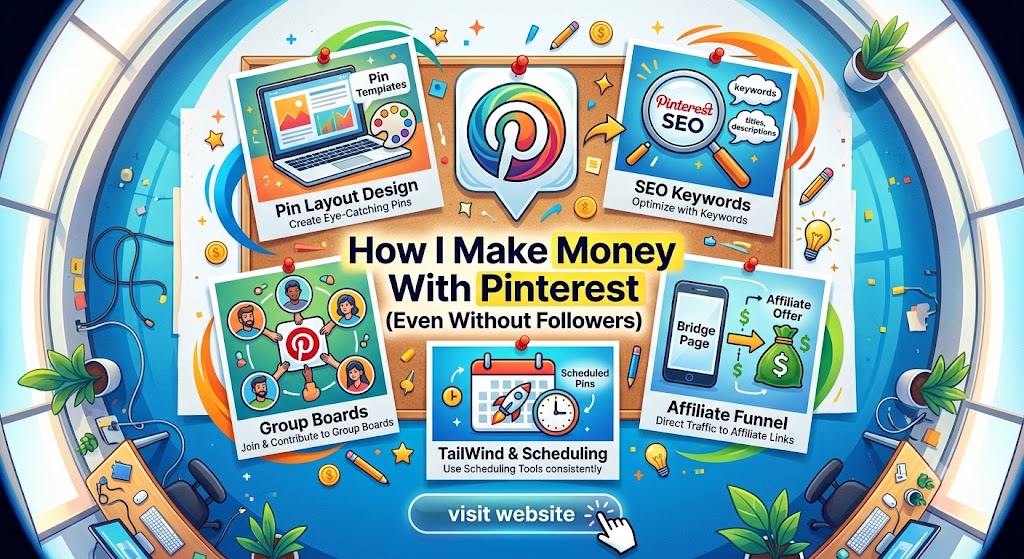
Monetizing Pinterest: Turning Visual Inspiration into a High-Revenue Machine
Pinterest is often misunderstood. Many see it as a digital scrapbook for wedding planning, DIY crafts, and keto recipes. However, savvy digital entrepreneurs know the truth: Pinterest is not a social media platform—it is a visual search engine. Unlike Instagram or TikTok, where content has a shelf life of a few hours, a single Pin can drive traffic and revenue for years.
With over 450 million active users who are specifically on the platform to find inspiration for their next purchase, Pinterest represents one of the highest-intent traffic sources on the internet. In this comprehensive guide, we will dive deep into every facet of making money on Pinterest, from the foundational SEO to advanced affiliate strategies and product launches.
1. The Foundation: Why Pinterest is a Goldmine for Profit
To make money on Pinterest, you must first change your mindset. On Facebook, people connect with friends. On X (formerly Twitter), they discuss news. On Pinterest, people plan.
Because users are in “planning mode,” they are significantly closer to the point of purchase. Whether they are planning a home renovation, a new wardrobe, or a side hustle, they are looking for solutions. If your Pin provides that solution, you win.
The Power of Longevity
On most platforms, your content dies quickly. On Pinterest, the “half-life” of a Pin is roughly 3.5 months. This means a Pin you create today could still be earning you affiliate commissions or ad revenue in 2026. This compounding effect is why Pinterest is the ultimate tool for passive income.
2. Setting Up for Success: The Pinterest Business Framework
You cannot effectively monetize a personal account. You need a Pinterest Business Account. It’s free and grants you access to:
- Pinterest Analytics: See exactly which Pins are driving clicks.
- Rich Pins: These automatically sync information from your website to your Pins (e.g., price, availability).
- Pinterest Ads: Access to the Promoted Pins platform.
- Verified Merchant Program: Essential for e-commerce sellers.
Optimizing Your Profile for SEO
Pinterest SEO begins with your profile. Your username and bio should include high-level keywords related to your niche. If you are in the “Personal Finance” niche, your name shouldn’t just be “Jane Doe”; it should be “Jane Doe | Budgeting Tips & Side Hustle Expert.”
3. Mastering Pinterest SEO: The Key to Viral Reach
Pinterest doesn’t care how many followers you have as much as it cares about how relevant your content is to a user’s search query.
Keyword Research
Use the Pinterest search bar to find what people are looking for. Type in a broad term like “Home Decor,” and Pinterest will suggest “Home Decor Ideas Living Room,” “Home Decor Aesthetic,” etc. These long-tail keywords are your roadmap.
Where to Place Keywords:
- Pin Titles: Make them catchy but keyword-rich.
- Pin Descriptions: Write naturally, but weave in 3-5 relevant keywords.
- Board Titles & Descriptions: Organize your Pins into specific boards that reflect search terms.
- Alt Text: Describe the image for accessibility while using your primary keyword.
4. Strategy #1: Affiliate Marketing (The Fastest Path to Profit)
Affiliate marketing is the process of earning a commission by promoting other people’s products. Pinterest is an affiliate marketer’s dream because you don’t even need a website to start.
Direct Linking vs. Bridge Pages
- Direct Linking: You create a Pin and put your affiliate link directly in the destination URL. This is the fastest method, but Pinterest can sometimes mark direct affiliate links as spam.
- Bridge Pages (Recommended): You drive traffic to a blog post or a simple landing page that reviews the product. This builds trust, allows you to capture email addresses, and is much safer for your account longevity.
High-Converting Affiliate Niches on Pinterest:
- Home Decor & Furniture: (Amazon Associates, Wayfair, Target).
- Fashion & Beauty: (LTK/rewardStyle, Sephora).
- Health & Wellness: (Supplement brands, fitness equipment).
- Software & Business: (Canva, hosting services, AI tools).
5. Strategy #2: Driving Traffic to a Monetized Blog
This is the “Classic Model.” You create helpful content on a blog and use Pinterest as a massive firehose of traffic.
How it Works:
- Write a “Listicle” or a “How-to” guide (e.g., “10 Ways to Save Money on Groceries”).
- Create 5-10 different Pin designs for that one article.
- Users click the Pin, land on your site, and you make money through:
- Display Ads: (Mediavine, AdThrive, or Ezoic). High-traffic blogs can earn $15-$50 per 1,000 visitors.
- Sponsored Content: Brands pay you to write about them.
- Internal Affiliate Links: Recommended products within the article.
6. Strategy #3: Selling Digital Products and Printables
Pinterest users love “DIY” and “Organizing.” This makes it the perfect place to sell digital downloads. Because there is no shipping or inventory, the profit margins are nearly 100%.
Popular Digital Products:
- Budget Planners: Huge in the personal finance niche.
- Meal Plans & Recipe E-books: Essential for fitness and parenting niches.
- Educational Worksheets: For teachers and homeschooling parents.
- Canva Templates: For other business owners.
Pro Tip: Use “Idea Pins” to show a video of you actually using the digital product. This builds “proof” and encourages viewers to click the link in your bio or the tagged product.
7. Strategy #4: Pinterest for E-commerce (Shopify & Etsy)
If you have a physical product, Pinterest is non-negotiable. With the Pinterest Shop integration, you can upload your entire product catalog.
Shoppable Pins
Pinterest allows you to tag products in your images. When a user hovers over a lamp in your “Living Room Inspiration” Pin, a small dot appears. They click it, and they are taken directly to your checkout page. This reduces friction and skyrockets conversion rates.
The Etsy Connection
Etsy sellers can find massive success on Pinterest. Since Etsy is already a visual marketplace, the content translates perfectly. Be sure to claim your Etsy shop on Pinterest to get attribution for all Pins originating from your store.
8. Strategy #5: Becoming a Pinterest Virtual Assistant (VA)
Not everyone wants to run their own brand. Many business owners know they should be on Pinterest, but they have no idea how to use it. This is where you come in.
As a Pinterest VA, you can charge $300 – $1,000+ per month per client to:
- Design Pins in Canva.
- Schedule Pins using tools like Tailwind.
- Perform keyword research.
- Optimize their profile.
This is a “service-based” income model that provides immediate cash flow while you build your own passive assets.
9. Creating High-CTR Pins: The Anatomy of a Viral Pin
You can have the best product in the world, but if your Pin design is boring, no one will click. Pinterest is a visual competition.
Design Principles for High Clicks:
- Vertical Aspect Ratio (2:3): Use 1000 x 1500 pixels. Square or horizontal pins get ignored.
- Bright, High-Quality Imagery: Avoid dark or blurry photos.
- Text Overlays: Use bold, easy-to-read fonts. Your text should tell the user exactly what they get if they click. Instead of “Travel Tips,” use “7 Secrets to Traveling Italy on $50 a Day.”
- Branding: Place your logo or website URL subtly at the bottom.
- The “Hook”: Use psychological triggers like curiosity (“The one thing I wish I knew…”), urgency (“Limited time offer”), or transformation (“How I lost 10lbs in 30 days”).
10. Leveraging Idea Pins for Brand Growth
Idea Pins (Pinterest’s version of Stories/Reels) are designed to keep users on the platform. While they don’t always allow for outbound links (depending on your region and account status), they are the best way to grow your following and “Monthly Views” metric.
Using Idea Pins to Make Money:
- Tagging Products: You can tag affiliate products or your own products within an Idea Pin.
- Brand Partnerships: Brands are now paying creators specifically to make Idea Pins showcasing their products.
- The Funnel: Use Idea Pins to gain followers, then use Standard Pins to drive those followers to your website.
11. Automation: How to Manage Pinterest in 20 Minutes a Week
To make significant money, you need volume. You cannot manually Pin 10 times a day. You need automation.
Tailwind: The Industry Standard
Tailwind allows you to schedule your Pins weeks in advance. Its “SmartLoop” feature reshared your best-performing content at optimal times.
- Tailwind Communities: These are groups of creators in the same niche who share each other’s content. This provides an immediate boost to new accounts.
Ghostwriter AI
Many scheduling tools now include AI that helps you write Pin descriptions and titles based on your keywords, saving you hours of copywriting.
12. Understanding the Analytics: What to Track
Don’t get distracted by “Vanity Metrics.”
- Monthly Viewers: This looks cool but doesn’t always equal money. It just shows how many people saw your Pins.
- Outbound Clicks: This is the most important metric. It shows how many people actually left Pinterest to go to your site or affiliate link.
- Saves (Repins): This tells the Pinterest algorithm that your content is high-quality, which will lead to more reach in the future.
13. Common Pitfalls to Avoid
Even experts fail if they fall into these traps:
- Being Spammy: Don’t Pin the same image 50 times in one day. Pinterest will shadowban you.
- Ignoring Trends: Use the “Pinterest Trends” tool to see what is peaking. Don’t promote Christmas decor in July.
- Low-Quality Content: Pinterest is a high-aesthetic platform. “Ugly” pins will kill your brand reputation.
- Giving Up Too Soon: Pinterest is a slow burn. It usually takes 3-6 months of consistent pinning to see significant traffic.
14. Advanced Strategy: The “Pinterest to Email” Funnel
If you want to build a long-term business, you must get your Pinterest traffic onto an email list.
- Create a “Lead Magnet” (a free PDF, checklist, or discount code).
- Create a Pin promoting the Lead Magnet.
- The Pin links to a Landing Page where they enter their email.
- Once they are on your list, you can sell to them via email marketing forever. This is how the most successful Pinterest entrepreneurs make six and seven figures.
15. The Future of Pinterest: Social Commerce
Pinterest is moving aggressively toward becoming a “full-funnel” shopping experience. With features like “Try-On” for makeup and “AR Furniture” for home decor, the platform is making it easier than ever for users to buy without even leaving the app.
To stay ahead, focus on Video Pins. The algorithm is currently prioritizing video content over static images. Short, 15-second “how-to” videos or product showcases are currently seeing the highest engagement rates.
Conclusion: Your Action Plan
Making money on Pinterest is not about “luck”—it is about SEO, design, and consistency. To start today:
- Switch to a Business Account.
- Identify your Niche and perform keyword research.
- Create 10 Boards with keyword-rich descriptions.
- Design 5 High-Quality Pins in Canva.
- Link them to an Affiliate Product or a Blog Post.
- Use Tailwind to maintain a consistent posting schedule.
Pinterest is the only platform where your work today continues to pay you years down the line. Stop scrolling and start pinning. Your future self—and your bank account—will thank you.