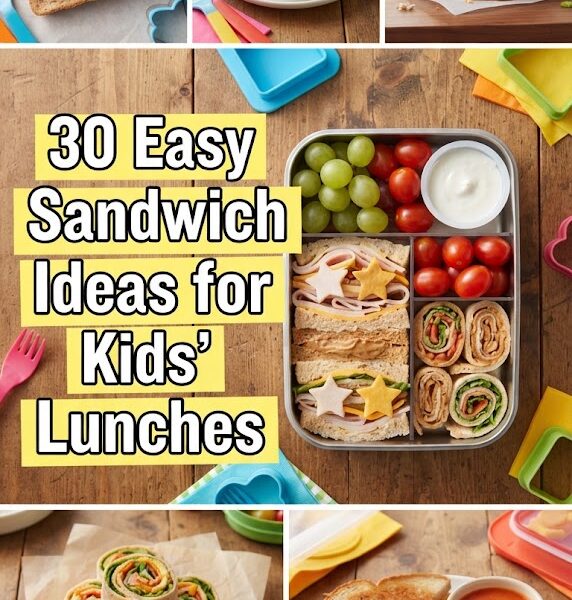
Packing lunch every morning can feel like a never-ending challenge. You want something quick, affordable, filling, and reasonably nutritious—but your child may have very different ideas about what belongs in a lunchbox.
The good news? You don’t need complicated recipes or expensive ingredients to make lunch exciting. A simple sandwich can become a completely different meal with a new spread, filling, bread, shape, or combination of flavors.
These 30 easy sandwich ideas for kids’ lunches are designed for busy families, school lunchboxes, picky eaters, and anyone who wants simple meals that don’t take much time to prepare. From classic peanut butter and jelly to chicken, turkey, cheese, veggie, breakfast-inspired, and fun-shaped sandwiches, there is something here for almost every young eater.
Sandwiches are especially useful for school lunches because they are portable, customizable, and easy for children to eat. The USDA also provides standardized sandwich recipes for child-care and nutrition programs, showing just how versatile sandwiches can be as part of kid-friendly meals.
Whether you’re packing lunch for kindergarten, elementary school, or a busy middle schooler, these ideas can help you escape the same-old sandwich routine.
Why Sandwiches Are Great for Kids’ Lunches
There is a reason sandwiches have remained a lunchbox favorite for generations. They are easy to assemble, require minimal cooking, and can be customized according to your child’s preferences.
A sandwich can also combine several useful lunch components in one convenient package. Bread provides grains, while fillings can add protein, dairy, vegetables, or fruit.
The key is not making every sandwich perfectly healthy or complicated. Instead, focus on creating lunches your child will actually eat while gradually offering variety.
For example, if your child loves turkey and cheese, you can start there. Then try adding cucumber, lettuce, avocado, or a different type of bread. Familiar ingredients make new foods less intimidating.
For picky eaters, presentation can matter, too. Cutting a sandwich into triangles, small squares, strips, or fun shapes can make an ordinary lunch feel more exciting. Johns Hopkins Medicine also recommends making children’s lunches visually appealing and finding different ways to serve foods children already accept.
30 Easy Sandwich Ideas for Kids’ Lunches
1. Classic Peanut Butter and Jelly Sandwich
You can’t go wrong with the classic PB&J.
Spread peanut butter on one slice of bread and your child’s favorite jelly or jam on the other. Put the slices together and cut them into triangles, squares, or fun shapes.
For a slightly different version, try strawberry jam, raspberry preserves, blueberry spread, or apple butter.
If your child’s school has a peanut or tree-nut restriction, substitute sunflower seed butter or another school-approved spread.
Lunchbox tip: Pack the sandwich with apple slices, baby carrots, and a small yogurt for a simple lunch.
2. Turkey and Cheese Sandwich
Turkey and cheese is one of the easiest savory sandwiches for kids.
Use whole-grain or multigrain bread, sliced turkey, and mild cheese such as cheddar, mozzarella, Swiss, or provolone.
You can add lettuce or cucumber if your child likes vegetables. For kids who dislike vegetables inside sandwiches, serve them separately.
Easy variation: Cut the sandwich into small squares and place them in a bento-style lunchbox with fruit and crackers.
3. Ham and Cheese Sandwich
A simple ham and cheese sandwich is perfect for busy mornings.
Layer sliced ham and cheese between two slices of bread. Add a little mustard or mayonnaise if your child enjoys it.
For younger children, use mild flavors and smaller portions.
You can also turn this combination into a toasted sandwich at home when you’re preparing lunch for the weekend.
4. Peanut Butter and Banana Sandwich
For kids who love peanut butter, banana is an easy way to change up the traditional PB&J.
Spread peanut butter over bread and add thin banana slices. A light sprinkle of cinnamon can add extra flavor.
This sandwich works especially well for breakfast or an after-school meal.
Tip: Banana can soften bread, so assemble it shortly before packing or place a thin layer of peanut butter on both slices to help create a barrier.
5. Cream Cheese and Cucumber Sandwich
This refreshing sandwich is simple, mild, and crunchy.
Spread cream cheese over two slices of bread and add thin cucumber slices.
For extra flavor, add a small amount of dill or everything-bagel seasoning if your child enjoys it.
You can also use mini bagels instead of sliced bread.
6. Chicken Salad Sandwich
Chicken salad is an excellent way to use leftover cooked chicken.
Combine chopped cooked chicken with mayonnaise or plain Greek yogurt. Add finely chopped celery if your child likes crunch.
Spoon the mixture onto bread and add lettuce if desired.
For a sweeter version, add a few chopped grapes or diced apple.
Lunchbox idea: Serve with berries, cucumber slices, and whole-grain crackers.
7. Grilled Cheese Sandwich
Grilled cheese isn’t just for dinner.
Make a classic grilled cheese with cheddar, mozzarella, American cheese, or another mild cheese your child enjoys.
Let the sandwich cool slightly before packing it so condensation doesn’t make the bread soggy.
For extra variety, try adding thin tomato slices or mashed avocado if your child enjoys them.
8. Pizza Sandwich
Turn a sandwich into a kid-friendly pizza-inspired lunch.
Spread a small amount of pizza sauce on bread and add shredded mozzarella. You can add finely chopped pepperoni, turkey pepperoni, or vegetables.
For a lunchbox version, keep the filling relatively dry so the bread doesn’t become soggy.
Another option is to make the sandwich at home and toast it lightly before cooling and packing.
9. Turkey Avocado Sandwich
Creamy avocado pairs naturally with turkey.
Mash avocado onto one slice of bread and layer sliced turkey on top. Add cheese or lettuce if desired.
A little lemon juice mixed into the avocado can help maintain its color.
If your child isn’t a fan of avocado, start with a very thin layer and pair it with a familiar filling such as turkey and cheese.
10. Apple and Cheddar Sandwich
This sweet-and-savory sandwich can be a fun way to introduce fruit into lunch.
Use thinly sliced apple and mild cheddar cheese between slices of bread.
For extra flavor, add a very thin layer of honey or apple butter.
Choose a crisp apple that doesn’t release too much moisture.
11. Egg Salad Sandwich
Egg salad is another simple protein-rich filling.
Mash hard-boiled eggs with mayonnaise or plain Greek yogurt. Add a small amount of mustard if your child likes it.
For younger children, keep the flavor mild.
Serve the sandwich with grapes, cucumber slices, or another fruit your child enjoys.
12. Tuna Salad Sandwich
Tuna salad can be a great change from turkey and ham.
Mix canned tuna with mayonnaise or Greek yogurt. Add finely chopped celery or pickle if desired.
Use sturdy bread and don’t overfill the sandwich.
If tuna isn’t popular in your house, try serving the filling with crackers first. Once your child becomes familiar with the flavor, a sandwich may be easier to introduce.
The USDA’s CACFP recipe collection includes tuna salad sandwich recipes, demonstrating that tuna can be incorporated into kid-focused meal programs.
13. Ham, Apple, and Cheese Sandwich
Combine thinly sliced ham, crisp apple, and mild cheese.
The salty ham, sweet apple, and creamy cheese create a simple combination with plenty of texture.
For picky eaters, keep each ingredient recognizable and use small amounts.
14. Hummus and Veggie Sandwich
Hummus can turn an ordinary sandwich into a vegetable-friendly lunch.
Spread hummus on bread and add thin slices of cucumber, shredded carrot, bell pepper, or lettuce.
If your child doesn’t like mixed vegetables, start with one familiar vegetable.
For example, use hummus and cucumber first. Once that combination is accepted, try adding another vegetable.
15. Turkey and Avocado Roll-Up Sandwich
For kids who don’t enjoy traditional sliced sandwiches, try a tortilla.
Spread mashed avocado over a tortilla, add turkey and cheese, and roll it tightly.
Slice the roll into pinwheels.
This format can make lunch feel completely different even though you’re using the same ingredients.
16. Peanut Butter and Honey Sandwich
Replace jelly with a small amount of honey for a simple variation on PB&J.
Spread peanut butter on bread and drizzle lightly with honey.
Add thin banana slices for an extra twist.
Important: Honey should not be given to children under 12 months of age.
17. Strawberry Cream Cheese Sandwich
For a sweet lunch option, spread cream cheese on bread and add thinly sliced strawberries.
You can also use strawberry cream cheese if that’s easier.
Because strawberries contain moisture, assemble this sandwich shortly before packing.
This is particularly fun for summer lunches when fresh berries are easy to find.
18. Nut-Free SunButter and Jelly Sandwich
If your child’s school is nut-free, SunButter or another school-approved seed butter can be an excellent alternative to peanut butter.
Pair it with jelly, jam, or mashed berries.
This gives children the familiar PB&J experience while accommodating schools with specific allergen policies.
Always check your school’s current allergy and food-sharing rules before packing lunch.
19. Turkey and Cream Cheese Sandwich
Cream cheese gives turkey sandwiches a smooth, creamy texture.
Spread cream cheese on bread, add turkey, and finish with cucumber or lettuce if your child likes it.
You can also roll the ingredients inside a tortilla and slice it into pinwheels.
20. Chicken and Cheese Sandwich
Use leftover roasted chicken or cooked chicken breast.
Add sliced or shredded chicken and mild cheese between two slices of bread.
A small amount of mayonnaise, hummus, or mashed avocado can help keep the sandwich moist.
This is an easy option when you have leftover chicken from dinner.
21. BLT-Inspired Kids’ Sandwich
A traditional BLT can be adapted for kids.
Use cooked bacon, lettuce, and tomato on bread with a small amount of mayonnaise.
If your child doesn’t like tomato, leave it out.
For younger kids, cut the sandwich into smaller pieces and make sure ingredients are prepared in an age-appropriate way.
22. Breakfast Sandwich
Who says breakfast foods can’t go into a lunchbox?
Make a simple sandwich using scrambled egg, cheese, and bread.
You can add turkey sausage or another family-approved breakfast protein.
For a cold lunchbox, make sure cooked ingredients are handled and stored safely and kept properly chilled.
23. French Toast Sandwich
Turn leftover French toast into a fun sandwich.
Place cream cheese and sliced strawberries between two pieces of French toast.
For a simpler version, use peanut butter and banana.
This works especially well for weekend lunches or meals at home.
24. Nut Butter and Apple Sandwich
Spread peanut butter, almond butter, or another school-approved nut or seed butter on bread.
Add thin apple slices and a sprinkle of cinnamon.
For schools with nut restrictions, use a school-approved alternative.
This sandwich is especially good for children who enjoy sweet flavors but need something more substantial than a snack.
25. Turkey, Cheese, and Cucumber Sandwich
This is one of the easiest ways to add a vegetable to a familiar sandwich.
Start with turkey and cheese. Add thin cucumber slices.
If your child doesn’t like cucumber inside sandwiches, serve cucumber sticks on the side.
Remember that introducing vegetables gradually is perfectly reasonable. The goal is to create positive exposure rather than turn lunchtime into a battle.
26. Rainbow Veggie Sandwich
Make lunch colorful with several thinly sliced vegetables.
Try cucumber, shredded carrot, bell pepper, and lettuce with hummus or cream cheese.
Don’t feel like you need to use every vegetable at once. Even two colorful vegetables can make a sandwich more interesting.
Let your child choose two vegetables from a small selection.
Giving children some control over their lunch can make them more interested in eating it.
27. Mini Sandwich Sliders
Small sandwiches can be much more appealing to young children.
Use mini dinner rolls, slider buns, mini bagels, or small pieces of bread.
Fill them with turkey and cheese, ham and cheese, chicken salad, or another favorite combination.
Mini sandwiches are also easy to portion and pack.
Try making two or three different flavors instead of one large sandwich.
28. Sandwich Pinwheels
Pinwheels are a fun alternative to traditional sandwiches.
Spread cream cheese, hummus, or another spread over a tortilla. Add turkey and cheese, then roll tightly.
Slice into small rounds.
You can make several pinwheels at once and store them appropriately for lunch.
Pinwheels are especially useful for children who like bite-sized foods.
29. Fun-Shaped Sandwiches
Sometimes presentation is all it takes to make an old favorite exciting again.
Use cookie cutters to turn sandwiches into stars, hearts, dinosaurs, animals, or other shapes.
You don’t need special equipment. A basic cookie cutter can transform a regular turkey and cheese sandwich.
You can also cut the sandwich into triangles or small strips.
Fun shapes are particularly useful when you’re dealing with a child experiencing lunchbox boredom.
30. Build-Your-Own Sandwich Lunch
Instead of making one finished sandwich, pack the ingredients separately.
Include:
- Small pieces of bread
- Turkey or chicken
- Cheese
- Cucumber
- Lettuce
- Hummus
- Fruit
- Crackers
Your child can assemble the sandwich at lunchtime.
This can be especially useful for picky eaters who dislike foods touching each other.
It also turns lunch into a small activity and gives children more control over what they eat.
How to Make Kids’ Sandwiches More Exciting
You don’t need 30 completely different recipes every month. A better strategy is to create variety from a small number of ingredients.
Start with three categories:
Bread:
Whole-grain bread, white bread, sandwich thins, mini bagels, English muffins, tortillas, pita, or slider buns.
Protein:
Turkey, chicken, eggs, tuna, hummus, peanut butter, seed butter, beans, or cheese.
Produce:
Apple, banana, cucumber, avocado, lettuce, tomato, shredded carrot, strawberries, or bell peppers.
Then mix and match.
For example:
Turkey + cheddar + cucumber
Turkey + cream cheese + cucumber
Turkey + avocado + cheese
Turkey + apple + cheddar
The ingredients overlap, but each sandwich tastes different.
This approach saves money, reduces grocery waste, and makes weekday lunch preparation much easier.
Best Bread for Kids’ Lunchbox Sandwiches
Choosing the right bread can make a big difference.
Whole-grain bread can add fiber and make a sandwich more filling. However, some children strongly prefer soft white bread.
If your child rejects whole-grain bread, don’t make the switch an all-or-nothing battle.
Try:
- Soft multigrain bread
- Whole-wheat sandwich bread
- Half whole-wheat and half white bread
- Sandwich thins
- Mini bagels
- Pita bread
- Tortillas
- English muffins
The goal is to find an option your child will actually eat.
How to Prevent Soggy Sandwiches
Nobody wants to open a lunchbox and find a soggy sandwich.
Fortunately, a few simple tricks can help.
Use a Moisture Barrier
Spread peanut butter, cream cheese, hummus, or another spread directly against the bread before adding watery ingredients.
Keep Wet Ingredients Minimal
Tomatoes, cucumbers, and juicy fruit can release water.
Pat vegetables dry before adding them.
Pack Wet Ingredients Separately
If your child doesn’t mind assembling lunch, place vegetables and spreads in separate containers.
Choose Sturdy Bread
Soft sandwich bread can become soggy faster than sturdy bread, pita, bagels, or tortillas.
Assemble Close to Packing Time
If possible, prepare sandwiches shortly before they go into the lunchbox.
Easy Sandwich Ideas for Picky Eaters
Picky eating is common, and lunch doesn’t need to become a daily struggle.
One useful approach is to start with foods your child already accepts.
For example, if they love cheese:
Step 1: Cheese sandwich
Step 2: Cheese + turkey
Step 3: Cheese + turkey + cucumber
Step 4: Cheese + turkey + avocado
This gradual approach introduces new ingredients alongside familiar foods.
You can also keep one “safe” food in the lunchbox.
For example, if you’re trying a new chicken sandwich, include a familiar fruit or cracker your child already enjoys.
Recent guidance for picky eaters similarly emphasizes familiar foods, variety, age-appropriate portions, and reducing pressure around eating.
Healthy Sides to Pack With Sandwiches
A sandwich doesn’t have to do all the work.
Round out lunch with one or two simple sides.
Fruit Ideas
- Apple slices
- Banana
- Grapes
- Blueberries
- Strawberries
- Orange segments
- Clementines
- Melon
- Pear slices
- Applesauce
Vegetable Ideas
- Baby carrots
- Cucumber slices
- Bell pepper strips
- Snap peas
- Cherry tomatoes
- Steamed broccoli
- Celery sticks
Other Easy Sides
- Yogurt
- Cheese cubes
- Whole-grain crackers
- Pretzels
- Popcorn for age-appropriate children
- Hard-boiled egg
- Hummus
- Seed butter
- Homemade snack bars
The USDA’s MyPlate approach encourages variety across food groups, while kid-lunch experts also recommend combining familiar foods with different textures and colors.
Easy Sandwich Meal Combinations
Turkey and Cheese Lunchbox
Turkey and cheese sandwich + apple slices + cucumber + yogurt
PB&J Lunchbox
Peanut butter and jelly sandwich + banana + carrots + crackers
Chicken Lunchbox
Chicken salad sandwich + strawberries + cucumber + cheese
Veggie Lunchbox
Hummus and veggie sandwich + grapes + crackers + yogurt
Ham and Cheese Lunchbox
Ham and cheese sandwich + orange slices + baby carrots
Egg Salad Lunchbox
Egg salad sandwich + berries + cucumber + pretzels
These combinations can be rotated throughout the week without requiring a completely different grocery list every day.
How to Get Kids Involved in Making Lunch
Children are often more interested in eating food when they have some involvement in preparing or choosing it.
You don’t need to let a young child handle a knife or stove. Instead, give them age-appropriate tasks.
You might ask:
“Do you want turkey or chicken?”
“Would you like strawberries or apples?”
“Triangle or square?”
“Do you want cucumber inside your sandwich or on the side?”
Older children can help spread ingredients, assemble sandwiches, wash produce, and pack their lunchbox.
Getting children involved can also make lunch preparation feel less like another chore for parents. Recent parenting guidance encourages age-appropriate participation in planning and preparing school lunches as a way to build independence.
Sandwich Lunch Ideas for Busy School Mornings
When mornings are hectic, preparation is everything.
Make a short list of sandwiches your child already enjoys and rotate them.
For example:
Monday: Turkey and cheese
Tuesday: PB&J
Wednesday: Chicken salad
Thursday: Ham and cheese
Friday: Pizza sandwich
You can prepare some ingredients ahead of time.
Cook chicken for several lunches, wash fruit, slice vegetables, and portion snacks into containers.
Then assembling lunch becomes a five-minute job instead of a morning cooking project.
Can You Make Kids’ Sandwiches Ahead of Time?
Some sandwiches can be prepared ahead, but freshness depends heavily on the ingredients.
Dryer fillings such as peanut butter and jelly generally hold up better than sandwiches containing juicy vegetables or moist fillings.
For sandwiches containing chicken salad, tuna salad, egg salad, cheese, meat, or other perishable ingredients, keep them properly refrigerated or chilled until lunchtime.
Food safety is especially important with school lunches. Perishable foods should not simply be left at room temperature for long periods. Current food-safety guidance warns that perishable lunch foods can become unsafe after extended periods without proper temperature control.
Use an insulated lunch bag and an appropriate ice pack when needed, and follow your school’s food-storage policies.
How to Make Sandwiches More Nutritious
A nutritious sandwich doesn’t need to contain dozens of ingredients.
Try making one small upgrade at a time.
Instead of regular bread, try whole-grain bread.
Instead of only cheese, add turkey.
Instead of jelly every day, occasionally use sliced fruit.
Instead of a plain sandwich, add cucumber or lettuce.
Instead of a large sandwich, use a smaller sandwich plus fruit, vegetables, and another familiar side.
Small changes can add variety without making lunch unrecognizable to your child.
Affordable Sandwich Ideas for Families
Sandwiches can also be budget-friendly.
You don’t need expensive specialty ingredients.
Some inexpensive staples include:
- Bread
- Peanut butter
- Jelly
- Eggs
- Cheese
- Canned tuna
- Cooked chicken
- Turkey
- Hummus
- Bananas
- Apples
- Carrots
- Cucumbers
Buying larger packages and using leftovers can help reduce costs.
For example, leftover roasted chicken from dinner can become chicken sandwiches the next day.
Leftover hard-boiled eggs can become egg salad.
Extra vegetables can become veggie sandwiches.
This makes lunch preparation easier while reducing food waste.
7-Day Kids’ Sandwich Lunch Plan
Here’s a simple weekly rotation.
Monday: Turkey and Cheese
Serve with apple slices, cucumber, and yogurt.
Tuesday: Peanut Butter and Jelly
Serve with banana slices, carrots, and crackers.
Wednesday: Chicken Salad
Serve with strawberries, cucumber, and cheese cubes.
Thursday: Ham and Cheese
Serve with orange slices, baby carrots, and pretzels.
Friday: Pizza Sandwich
Serve with grapes, cucumber, and yogurt.
Saturday: Egg Salad
Serve with berries and crackers.
Sunday: Hummus and Veggie
Serve with apple slices and cheese.
For school lunches, adjust the ingredients according to your child’s preferences and your school’s allergy policies.
Tips for Packing the Perfect Kids’ Lunchbox
Keep lunch simple.
A lunchbox doesn’t need to look like a restaurant meal.
A good basic formula is:
1 main + 1 fruit + 1 vegetable + 1 optional snack
For example:
Turkey sandwich + strawberries + cucumber + crackers.
Another simple formula is:
Protein + grain + produce + dairy or another familiar side
This gives you a flexible framework without requiring complicated meal planning.
Bento-style lunchboxes can also make portions visually manageable and allow you to separate foods that your child doesn’t like touching.
Frequently Asked Questions
What are easy sandwich ideas for kids’ lunches?
Some of the easiest options include peanut butter and jelly, turkey and cheese, ham and cheese, chicken salad, egg salad, tuna salad, grilled cheese, hummus and cucumber, peanut butter and banana, and turkey avocado sandwiches.
What sandwiches are good for picky eaters?
Start with familiar flavors. Turkey and cheese, peanut butter and jelly, ham and cheese, cream cheese and cucumber, and simple chicken sandwiches are often easier starting points than sandwiches with many unfamiliar ingredients.
How do I make school sandwiches less boring?
Change one element at a time. Try a new bread, shape, cheese, spread, or fruit. You can also make pinwheels, sliders, mini sandwiches, or fun shapes.
What can I put in a kids’ lunchbox besides sandwiches?
Fruit, vegetables, yogurt, cheese, crackers, hummus, hard-boiled eggs, pretzels, and other age-appropriate snacks can complement a sandwich.
How do I stop sandwiches from getting soggy?
Use sturdy bread, dry vegetables before adding them, avoid excessive moisture, create a barrier with spreads, and consider packing wet ingredients separately.
Can I make kids’ sandwiches the night before?
Some sandwiches hold up well overnight, especially relatively dry combinations. More delicate sandwiches with juicy vegetables or moist fillings may be better assembled closer to lunchtime. Refrigerate perishable ingredients appropriately.
Are sandwiches healthy for kids?
Sandwiches can be part of a balanced lunch. The nutritional quality depends on the ingredients and portion size. Pairing a sandwich with fruit, vegetables, and other suitable foods can provide variety.
What bread is best for children’s sandwiches?
There isn’t one perfect choice. Whole-grain bread can provide more fiber, while soft white bread may be more acceptable to picky eaters. The best choice is one your child enjoys while fitting your family’s nutritional needs.
How can I make lunch more fun for kids?
Use cookie cutters, mini sandwiches, colorful fruits and vegetables, pinwheels, or build-your-own sandwich kits. Letting children choose between two or three options can also make them feel involved.
Final Thoughts
Packing school lunch doesn’t have to mean making an elaborate meal every morning.
With these 30 easy sandwich ideas for kids’ lunches, you can create dozens of combinations using ingredients you probably already have at home.
Start with familiar favorites such as peanut butter and jelly, turkey and cheese, ham and cheese, or chicken salad. Then gradually experiment with avocado, cucumber, apples, hummus, berries, and other ingredients.
The biggest secret is variety without unnecessary complexity.
Change the bread.
Change the shape.
Change the spread.
Change the filling.
Add a different fruit.
Let your child choose.
A simple sandwich can become a completely new lunch with just one small change.
Most importantly, remember that the goal isn’t to create a picture-perfect lunchbox every day. The goal is to pack food that is practical, appealing, and appropriate for your child.
Whether you’re looking for easy school lunch ideas, healthy sandwich recipes for kids, picky eater lunch ideas, simple lunchbox sandwiches, or quick kids’ lunch recipes, these ideas give you plenty of options to keep lunchtime interesting.
With a little planning and a few reliable ingredients, you can make school lunches easier for yourself—and much more exciting for your kids.